

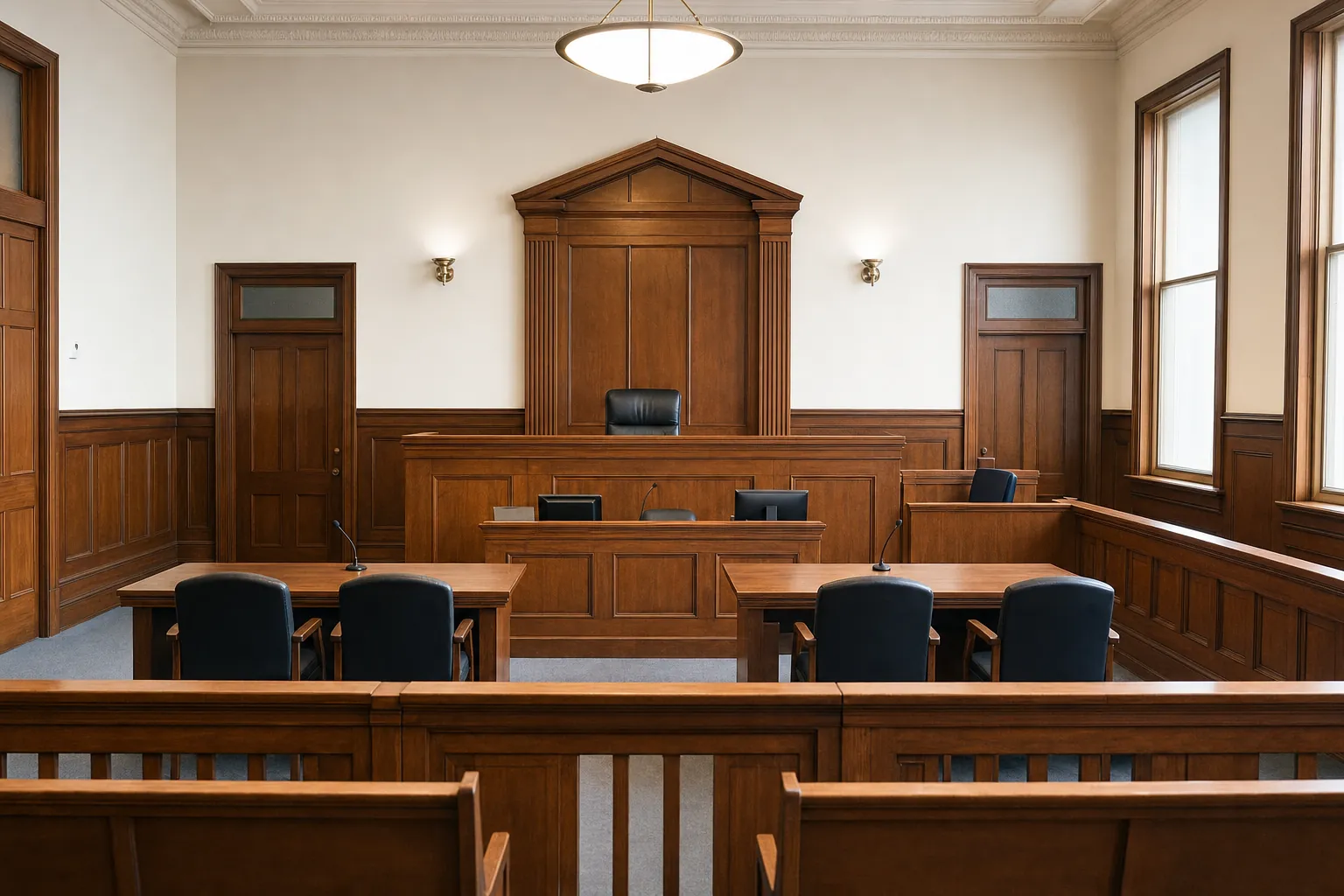
An arraignment is the first formal court appearance in a criminal case. It is the moment the court tells a person what they are charged with, makes sure they have access to a lawyer, and sets the case on its next path. It is important, but it is not a trial and it is not a finding of guilt.
For Middlesex County residents, arraignments are one of the clearest windows into the daily work of the criminal justice system. They are where a case moves from an arrest, summons, or complaint into court. Families, victims, witnesses, and community members may hear that someone has been arraigned and reasonably wonder what that means. The short answer is that the legal process has formally begun, with safeguards for the accused and important information for the people affected by the case.
What happens at an arraignment?
In Massachusetts, the court typically handles three core things at an arraignment. The charges are stated, the person charged has an opportunity to enter a plea, and the court addresses counsel and the next court date. The Commonwealth’s arraignment guidance explains that those steps may not happen in the same order in every courtroom.
The prosecutor appears for the Commonwealth. The defense lawyer represents the person charged. The judge oversees the hearing and makes the legal decisions that belong to the court. A clerk and probation staff may also have roles depending on the case and court. This is not a dramatic recreation of a crime. It is a structured first appearance designed to make the charge and the next steps clear.
For a broader view of the people involved, the campaign’s guide to the District Attorney’s role explains how prosecutors review evidence and represent the Commonwealth, while judges and juries retain their separate responsibilities.
Charges are announced, but the case is not decided
At arraignment, the court identifies the criminal charge or charges. A charge is an accusation that must still be tested through the legal process. The person charged may plead not guilty, guilty, or no contest in circumstances allowed by law. When a case continues, a not-guilty plea preserves the right to challenge the evidence and require the Commonwealth to prove the charge.
This distinction matters. An arrest, a complaint, or an arraignment does not establish that someone committed a crime. The Commonwealth has the burden to prove a criminal charge in court, and judges and juries make independent decisions under the law. Careful language protects fairness for everyone, including victims and families who deserve reliable answers rather than rushed conclusions.
Some lower-level cases can be resolved at an arraignment, but many continue to a pretrial conference or another hearing. The court sets the next date, and the parties use the time before then to review information, discuss legal issues, prepare witnesses when needed, and decide how the case should proceed.
Why access to a lawyer is part of the first hearing
A person facing a criminal charge has the right to a lawyer. If a charge could lead to jail time and the person cannot afford counsel, the court can appoint a lawyer. Massachusetts court guidance explains that a duty lawyer is often available at or around the arraignment so the person can speak privately with counsel before important decisions are made.
That protection is not a technicality. A criminal case can affect work, family, housing, immigration status, education, and other parts of a person’s life. A lawyer helps a defendant understand the charge, the choices in court, and the consequences that may follow from a plea or a condition of release. The prosecutor does not represent the accused person; the prosecutor’s duty is to represent the Commonwealth fairly and follow the law.
For voters, this is one reason a well-run District Attorney’s office needs preparation and judgment. The office must pursue serious cases with care while respecting the constitutional process that makes its decisions legitimate. David’s public-safety priorities focus on protecting communities, supporting survivors, and pursuing accountable justice rather than treating fairness and safety as competing goals.
What does the judge decide about bail or release?
In some cases, the arraignment also includes a bail hearing or a discussion of release conditions. The judge considers the information presented and decides whether a person will be released, whether bail is set, or whether conditions should apply while the case is pending. Conditions can include requirements such as staying away from a named person or place, avoiding contact, or returning to court on the next date.
A prosecutor may make a recommendation, but the judge makes the court’s decision. In the most serious situations, Massachusetts law also provides for dangerousness proceedings, which are separate legal processes with their own standards. An arraignment should not be reduced to one question about bail: it is a first hearing that must balance public safety, the facts of the case, and the rights built into the court system.
The scale of this work is substantial. The campaign’s Middlesex County justice data reference reports 18,548 new cases arraigned in 2024. That volume is why experienced courtroom leadership and clear office standards matter. Thousands of early decisions need to be handled carefully, consistently, and with attention to the real people affected by each case.

How do victims and witnesses fit into the process?
An arraignment can be an anxious day for victims, survivors, witnesses, and families. They may want to know whether the person charged will be released, what conditions will apply, and when the next court date is scheduled. The Massachusetts Victim Bill of Rights guidance says victims and witnesses have the right to information about how a case progresses, notice of significant developments on request, and timely notice when a required court appearance changes.
District Attorney offices use victim-witness staff to help people understand the court process and connect with services. That support does not promise a particular outcome. It does mean people should not be left to navigate an unfamiliar system alone. Clear communication, respectful preparation, and accurate case updates are practical ways an office can show that it takes harm seriously.
Victims may also have the right to be present at court proceedings, subject to rules that protect the integrity of testimony, and to confer with the prosecution at key stages. Anyone directly affected by a current case should seek information from the appropriate prosecutor’s office or a qualified advocate rather than relying on general online guidance.

What must prosecutors assess before the case reaches court?
An arraignment happens early, but it is not the first moment of judgment in a criminal case. Before appearing in court, prosecutors may need to assess police reports, witness accounts, video, physical evidence, the legal elements of a possible charge, and information that could affect the reliability of the case. In some matters, that review is quick. In others, especially cases involving serious violence, digital evidence, vulnerable witnesses, or a long investigative history, it can be demanding work.
Prosecutors are not asked simply to repeat an arrest. Their responsibility is to decide whether the available facts and law support bringing the case forward. That can mean approving a charge, asking for more investigation, narrowing a charge, or deciding that the evidence does not support moving ahead. Once a case is in court, prosecutors also have continuing duties to share information required by law and to reassess the evidence as new facts emerge.
This is where the difference between a prosecutor and a District Attorney matters. Assistant District Attorneys handle the detailed work of individual cases, while the elected District Attorney sets the office’s training, supervision, and standards. The campaign’s guide to Assistant District Attorneys explains how those prosecutors work with evidence, police, victims, and witnesses as a case moves through the courts.
For voters, the takeaway is straightforward: an effective office needs enough experience to act decisively when the evidence is strong and enough discipline to recognize when more work is needed. Both are part of public safety. Reliable cases protect communities better than rushed decisions that do not withstand courtroom scrutiny.
What an arraignment cannot answer yet
Families often want immediate answers after an arraignment: Will there be a trial? How long will the case take? Will there be a conviction? Will the person charged remain in custody? Those questions are understandable, but many cannot be answered at the first hearing. The court has not heard all the evidence, witnesses may not have testified, legal motions may still be ahead, and the judge or jury has not decided the facts.
Even a release decision at arraignment is not the final outcome of a case. It addresses what should happen while the case is pending under the standards that apply at that stage. The case can later change as evidence is reviewed, witnesses are heard, conditions are modified, or a judge rules on a legal issue. Clear communication from the prosecutor’s office is especially important because people can otherwise mistake a first appearance for the end of the process.
It is also important not to confuse the public’s interest in a case with a right to private information. Courts and prosecutors must protect legally confidential material, the safety of witnesses, and the integrity of an active investigation. A responsible office can be transparent about court dates, process, and available support while still safeguarding information that should not be released.
What happens after an arraignment?
Most cases move to another date after the arraignment. Depending on the charge and court, that can include a pretrial conference, motion hearing, probable-cause hearing, plea discussion, trial date, or other proceeding. The parties may exchange information required by law, investigate further, assess the evidence, and address issues that need a judge’s decision.
In Massachusetts, cases can begin in different courts depending on the charge. The Commonwealth’s court-process overview explains that District Court cases generally begin with a complaint, while Superior Court cases begin with an indictment after a grand jury finds probable cause. A grand-jury indictment is also not a conviction; it is the formal charging step for a case that proceeds in Superior Court.
The next steps can take time, especially when a case involves serious allegations, multiple witnesses, forensic evidence, or legal questions that need to be resolved before trial. The goal should be neither delay for delay’s sake nor a rushed outcome. Good prosecution requires enough preparation to present the facts honestly and enough discipline to recognize when the evidence does not support a charge.
What should Middlesex County voters take from this?
An arraignment shows why the District Attorney’s job is larger than a single courtroom speech. Early case decisions require lawyers who understand evidence, victims’ needs, constitutional protections, and the practical demands of a busy court. The elected DA sets the standards, staffing, training, and priorities that shape how that work is done across the county.
David Solet’s experience includes leading complex cold-case investigations and serving as Chair of the Middlesex District Attorney’s Office Conviction Integrity Committee. Readers can see examples of that long-term casework in the campaign’s cold-case record and learn more about the experience behind his campaign on David’s background page.
For residents, the useful question is not whether every case produces a headline. It is whether the District Attorney’s office has the experience and judgment to handle first appearances, investigations, victim communication, and courtroom decisions with the care Middlesex County deserves.
Learn More
See David Solet’s record and priorities
Explore the experience behind his campaign for a safer, fairer, and more accountable Middlesex County.
Meet DavidFrequently asked questions
Is an arraignment the same as a trial?
No. An arraignment is an early court appearance where charges are stated and the case’s next steps are set. A trial, if there is one, happens later and is where the Commonwealth must prove the charge under the rules of court.
Does arraignment mean someone has been found guilty?
No. An arraignment is a formal charge and first appearance, not a finding of guilt. A person charged has the right to a lawyer and the right to challenge the case through the legal process.
Can a judge set bail at an arraignment?
Yes. In appropriate cases, the judge can address bail or conditions of release at the arraignment. The prosecutor and defense may be heard, but the judge makes the court’s decision.
What can victims expect after an arraignment?
Victims and witnesses can seek information about the case’s next date, court requirements, and available support from the appropriate prosecutor’s office or a qualified advocate. Massachusetts provides rights to case information and notice in many circumstances.
Related posts

Voter Guide
What Does a District Attorney Do? A Massachusetts Voter Guide
Learn what a District Attorney does in Massachusetts: reviews evidence, brings cases to court, supports victims, and leads a county prosecutor's office.
Read the guide
Voter Guide
District Attorney vs. Prosecutor: What’s the Difference?
A District Attorney is the elected chief prosecutor who leads the office, while prosecutors handle individual criminal cases.
Read the guide
Voter Guide
What Is an Assistant District Attorney? A Voter’s Guide
An Assistant District Attorney, or ADA, is a prosecutor who reviews cases, appears in court, and works with victims and witnesses.
Read the guide
Voter Guide
What Happens at a Pretrial Hearing? A Massachusetts Guide
A pretrial hearing is a court date after arraignment where lawyers address evidence, legal issues, and next steps before trial.
Read the guide