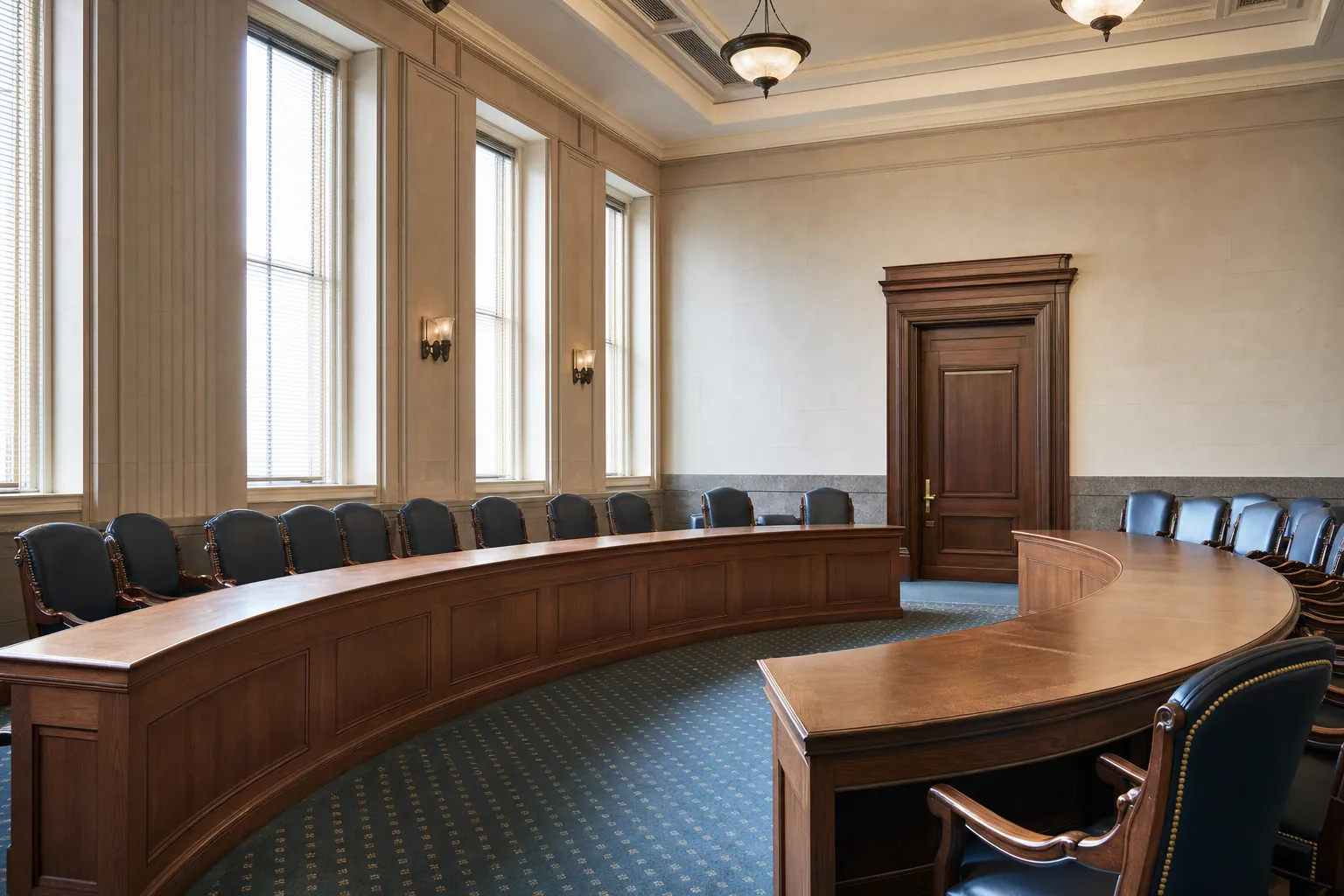
A grand jury is not a trial, and it does not decide whether someone is guilty. It is an early, confidential stage used in some serious criminal cases. Grand jurors hear evidence presented by a prosecutor and decide whether there is enough reason to issue an indictment, which allows the case to move forward in Superior Court.
That distinction matters. A grand-jury proceeding is about whether a case should formally continue, not about deciding the final outcome. The person accused has the right to challenge the case later through the court process, and the Commonwealth still carries the burden of proving any charge at trial. For residents trying to follow a serious case, this guide explains what a grand jury does, who participates, and why careful prosecutorial preparation matters.
What is a grand jury?
In Massachusetts, a grand jury is a group of citizens called to consider evidence in potential criminal cases. A prosecutor presents witnesses and other evidence, then asks the grand jury to decide whether there is probable cause to believe a crime was committed and that the person named in the case committed it. If the required jurors agree, the grand jury returns an indictment.
An indictment is a formal accusation. It is not a conviction, a finding of guilt, or a sentence. It means the case has cleared one legal threshold and can proceed to the next stages of court. The defendant is entitled to counsel, to review the case through the legal process, and to require the Commonwealth to prove the charge if the case goes to trial.
The Massachusetts Rules of Criminal Procedure set the framework for grand-jury proceedings. The details of any case can vary, especially when there are multiple charges, co-defendants, or legal questions that must be resolved by a judge. This guide is a general explanation, not legal advice for an individual case.
Why are some cases presented to a grand jury?
Grand juries are commonly associated with serious felony cases that may be prosecuted in Superior Court. A prosecutor may use a grand jury when the law requires an indictment for the charge or when a full grand-jury investigation is the appropriate way to present evidence in a serious matter. The decision depends on the charge, the available evidence, the court that will handle the case, and the requirements of Massachusetts law.
The process is designed to create an independent check before a serious case advances. Prosecutors do not simply announce that a case will move forward. They must prepare a presentation that gives jurors a reliable basis to decide whether probable cause exists. That includes selecting witnesses carefully, organizing records, and being candid about what the evidence does and does not show.

Probable cause is a lower standard than proof beyond a reasonable doubt, which is the standard required for a conviction at trial. In plain language, a grand jury is not asked to decide every contested fact or to predict the final verdict. It is asked whether the evidence presented establishes a sufficient basis to charge the case formally. That is why an indictment begins, rather than ends, the court process.
What happens during a grand-jury presentation?
The prosecutor leads the presentation. Depending on the case, that may include testimony from police officers, civilian witnesses, experts, or other people with relevant information. Jurors may hear about physical evidence, documents, photographs, recordings, digital records, or the steps investigators took. The exact presentation is shaped by the facts and the legal elements the Commonwealth must establish.
A witness who is called before a grand jury answers questions under oath. A prosecutor can seek a witness subpoena when needed. Massachusetts law authorizes district attorneys and the Attorney General to issue subpoenas for witnesses to appear and testify for the Commonwealth, as explained in Chapter 277, Section 68 of the General Laws.
Grand jurors can listen closely and ask questions through the process established by the court. They are not spectators. Their responsibility is to evaluate whether the evidence reaches the probable-cause standard. A thoughtful grand jury can ask for clarification and consider whether the evidence supports each charge the prosecutor is requesting.
The presentation is usually not a dramatic courtroom event. There is no judge or jury deciding guilt after opposing lawyers make closing arguments. Instead, it is a focused legal proceeding in which the grand jury hears the Commonwealth's evidence and decides whether to return an indictment. If an indictment is returned, the case then moves into the ordinary court process, where the defense has a full opportunity to respond.
Why is the grand-jury process confidential?
Grand-jury proceedings are generally confidential. That confidentiality helps protect the integrity of an investigation, encourages witnesses to speak candidly, and avoids turning an untested accusation into a public spectacle before the case has reached trial. It also protects people who may be investigated but never charged.
For families and community members, the lack of public detail can be frustrating. They may hear that a case is being presented to a grand jury without learning every witness's statement, every document, or every question asked. Confidentiality does not mean the process is informal or unimportant. It means the matter is being considered before the case enters a more public phase of court.
Once a case moves forward, court filings, hearings, and trial proceedings may become public according to the usual rules of court. But the grand-jury stage itself should not be confused with a public trial. Responsible public communication requires patience: it is possible to acknowledge the seriousness of a case without claiming that an indictment has already proved every allegation.
What happens if the grand jury returns an indictment?
If the grand jury returns an indictment, the case is formally charged in Superior Court. The person charged will be brought before the court for an arraignment, where the charges are stated and the next steps are set. The campaign's arraignment guide explains that first public court appearance in more detail.
After arraignment, the case may involve evidence sharing, motions, hearings, plea discussions, and trial preparation. The prosecutor must continue to review the evidence and meet all legal obligations. The defense can challenge the charges, the evidence, and the legal process. A judge decides legal questions, and if the matter reaches trial, a trial jury determines guilt or innocence.
Not every indicted case ends the same way. A case may be resolved through a plea, dismissed if the facts or law no longer support it, or tried before a jury. The campaign's guides to pretrial hearings and plea hearings explain two of the stages that may follow.
What can victims and witnesses expect?
For victims, survivors, and witnesses, a grand-jury investigation can be an especially uncertain period. A person may be asked to meet with an investigator or prosecutor, provide information, preserve records, or testify. They may also have questions about timing, confidentiality, safety, and what an indictment would mean for the case.
A prosecutor's office cannot promise a particular result or disclose information that must remain confidential. It can, however, communicate respectfully, explain the next step when it can be shared, and connect people with practical support. Massachusetts' Victim Bill of Rights outlines important protections and resources for victims as a criminal case moves through the system.

Witnesses should take any subpoena or request from a prosecutor's office seriously and ask questions about logistics, safety concerns, or accommodations. A witness who needs legal advice of their own should speak with a qualified attorney. The best public-facing service is clear information, honest limits, and a process that treats people with dignity rather than leaving them to guess.
What a grand jury does not decide
A grand jury does not decide whether someone is guilty beyond a reasonable doubt. It does not impose a sentence. It does not replace a judge, and it does not erase the accused person's constitutional rights. Its role is narrower and earlier: deciding whether the Commonwealth has shown probable cause for a formal charge.
This is an important safeguard against misunderstanding high-profile cases. An indictment can be a serious development, but it is not the end of the process. Residents should be careful about treating an accusation as a verdict, and public officials should be careful about speaking as though a charge has settled every fact. Justice requires both accountability and a process that respects the presumption of innocence.
Why grand-jury work matters in a District Attorney election
Grand-jury presentations are built on preparation. A prosecutor must understand the evidence, explain it clearly, follow the law, and make sure the case is ready for careful review. The elected District Attorney sets the standards for that work across the office: how prosecutors are trained, how serious cases are supervised, how witnesses are prepared, and how victims are kept informed without compromising an investigation.
David Solet brings 24 years of prosecution experience to that responsibility. His record includes leading the Middlesex County Cold Case Homicide Unit, serving as the first Chief of the Cyber Protection Unit, and advising the office on policy and ethics as General Counsel. Readers can explore his background in prosecution and public safety, his cold-case record, and his priorities for safer communities.
For Middlesex County voters, the question is whether the next District Attorney has the judgment to treat serious cases with urgency while respecting the rules that make a prosecution fair. Grand-jury work is one example of why experience matters before a case ever reaches a public courtroom.
It also shows why steady leadership matters behind the scenes. A well-run office gives prosecutors time to prepare, supervisors who can ask the hard questions, and victim-witness staff who can support people without making promises the law does not allow. Those are practical standards that help a public office earn confidence in the cases residents see and in the many careful decisions they never see.
See the experience behind David Solet's campaign
Explore David's record in prosecution, cold cases, victim support, and public safety.
Meet DavidFrequently asked questions
Is a grand jury the same as a trial jury?
No. A grand jury decides whether there is probable cause to issue an indictment. A trial jury hears evidence in a public court case and decides whether the Commonwealth has proved a charge beyond a reasonable doubt.
Does an indictment mean someone is guilty?
No. An indictment is a formal accusation that allows a case to proceed. The person charged remains entitled to due process, legal counsel, and the presumption of innocence unless guilt is proved in court or the case is otherwise resolved lawfully.
Can a witness be called before a grand jury?
Yes. A prosecutor may ask a witness to provide information or testimony, and in some situations can issue a subpoena. A witness with questions about their own rights or obligations should speak with a qualified attorney.
Are grand-jury proceedings public?
Grand-jury proceedings are generally confidential. That protects investigations, witnesses, and people who may never be charged, while allowing the case to be evaluated before it reaches a more public stage of court.
Related posts
Voter Guide
What Does a District Attorney Do? A Massachusetts Voter Guide
Learn what a District Attorney does in Massachusetts: reviews evidence, brings cases to court, supports victims, and leads a county prosecutor's office.
Read the guide
Voter Guide
District Attorney vs. Prosecutor: What’s the Difference?
A District Attorney is the elected chief prosecutor who leads the office, while prosecutors handle individual criminal cases.
Read the guide
Voter Guide
What Is an Assistant District Attorney? A Voter’s Guide
An Assistant District Attorney, or ADA, is a prosecutor who reviews cases, appears in court, and works with victims and witnesses.
Read the guide
Voter Guide
What Happens at an Arraignment? A Voter’s Guide
A clear Massachusetts guide to the first criminal court appearance, including charges, counsel, release decisions, and what comes next.
Read the guide